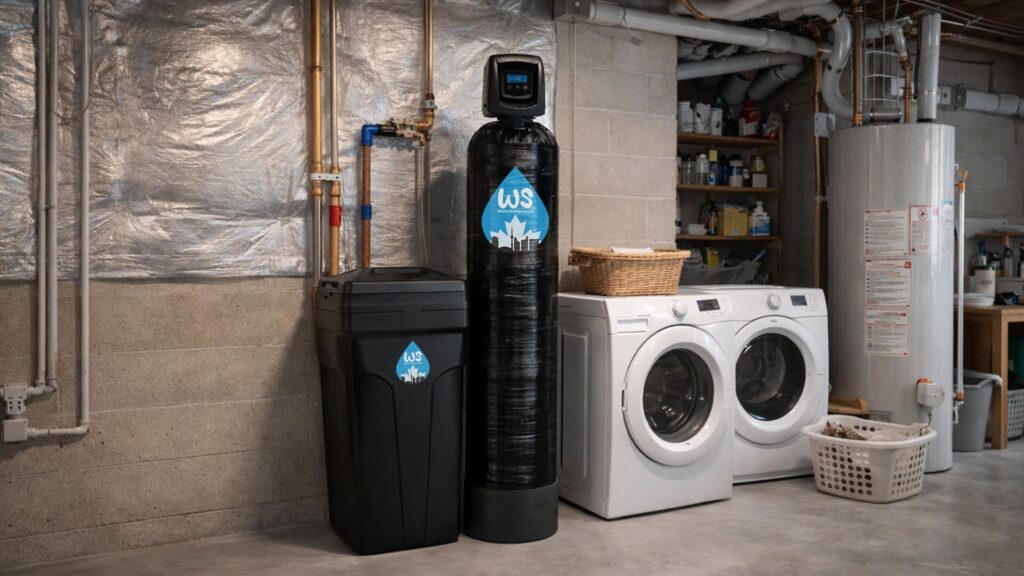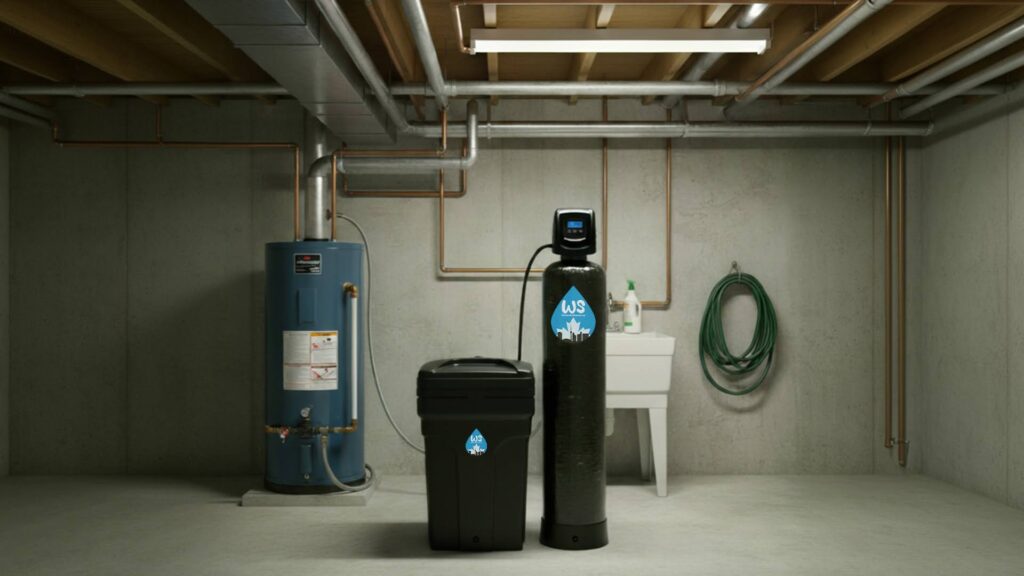
Mississauga water is clean, treated, and safe to drink. That part is not really the debate.
The real question homeowners ask is different:
If the water is already safe, do you still need a water softener in Mississauga?
That is where the answer gets more practical. Safe water and soft water are not the same thing. Your tap water can meet drinking water standards and still leave white crust in your kettle, cloudy spots on your glasses, soap scum on shower doors, stiff laundry, dry-feeling skin, and scale inside your water heater.
According to Peel Region’s South Peel Water Quality Report, the South Peel Drinking Water System supplies Mississauga, Brampton, and parts of Caledon. The report lists water hardness at about 120 to 130 mg/L as CaCO₃, or 7.0 to 7.6 grains per gallon, and describes South Peel water as moderately hard. Peel also notes that hard water can form scale deposits, white film, and excessive soap scum when heated or used with regular soaps.
So, is Mississauga water “good enough”? For drinking, yes. For protecting your appliances, plumbing, fixtures, laundry, and daily comfort, many homes can still benefit from a water softener in Mississauga.
Let’s break it down properly.
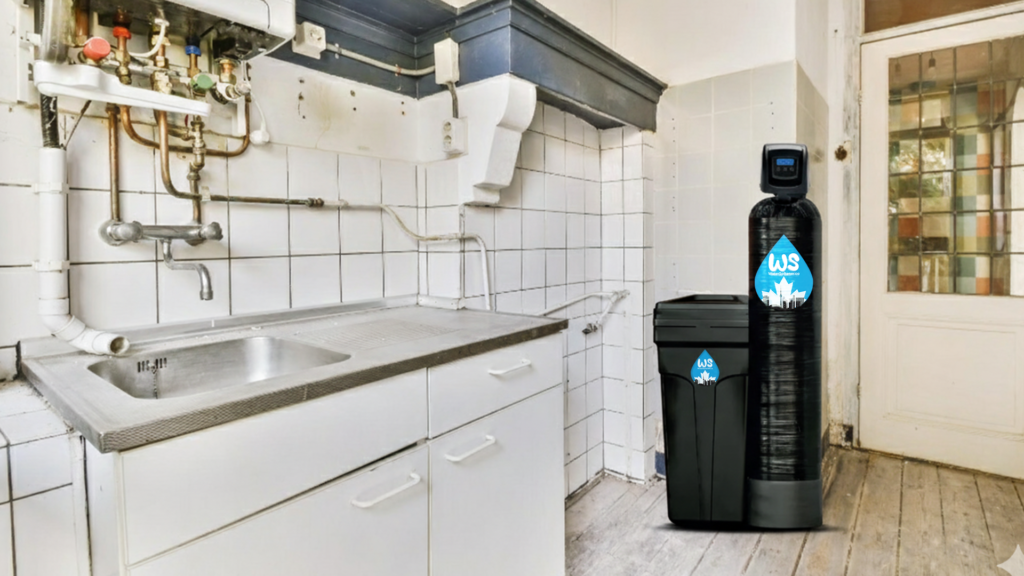
Yes, Mississauga water is moderately hard.
The most useful number to know is this:
| Local Water Detail | Mississauga / South Peel Range | What It Means |
| Hardness in mg/L | 120 to 130 mg/L as CaCO₃ | Moderate hardness |
| Hardness in grains per gallon | 7.0 to 7.6 gpg | Enough to cause scale over time |
| Water source/system | South Peel Drinking Water System | Serves Mississauga and nearby areas |
| Main hard water minerals | Calcium and magnesium | Naturally occurring minerals |
| Common result | Scale, white film, soap scum | Most noticeable when water is heated |
This matters because water hardness is not usually dangerous. The issue is what it does inside your home every day.
When hard water is heated, the calcium and magnesium can separate from the water and cling to surfaces. That is why the signs often show up around kettles, faucets, shower glass, dishwashers, washing machines, and water heaters.
That is also why many people do not think about hard water until something starts looking cloudy, feeling rough, or working less efficiently.
“But If the City Water Is Safe, Why Would I Need a Softener?”
This is the most common homeowner doubt, and honestly, it is a fair one.
A water softener in Mississauga is not usually about making unsafe water safe. It is about reducing hardness minerals before they build up inside your home.
Peel Region clearly states that its drinking water meets government requirements and is safe and clean. But the same municipal reporting also explains that hardness can create scale deposits, white film, and soap scum.
So the better way to think about it is:
| Question | Answer |
| Is Mississauga tap water safe to drink? | Yes, municipal water is treated and monitored. |
| Is Mississauga water naturally soft? | No, it is moderately hard. |
| Does hard water mean the water is unhealthy? | Not usually. Hardness is mostly calcium and magnesium. |
| Can hard water still affect your home? | Yes, especially appliances, fixtures, soap performance, and hot water systems. |
| Is a softener mandatory for everyone? | No. It depends on your home, water use, and tolerance for scale. |
| Is it worth testing? | Yes, especially if you see repeated signs of hard water. |
That is why the question should not be, “Is Mississauga water bad?”
The better question is, “Is the hardness level causing problems in my home?”
The Signs Your Mississauga Home May Need a Water Softener
Some homeowners notice hard water right away. Others only realize it after years of scrubbing, replacing parts, or dealing with appliance issues.
Here are the signs that make a water softener in Mississauga worth considering.
1. White Scale in Your Kettle or Coffee Machine
This is one of the easiest signs to spot.
If you boil water and see chalky white buildup inside the kettle, that is usually mineral scale. Peel Region explains that when water is boiled, calcium and magnesium can precipitate out and deposit on heating elements and inner surfaces.
You can clean it with vinegar, but if it keeps coming back, that means the minerals are still entering your home every day.
2. Cloudy Glassware After the Dishwasher
If your glasses come out looking foggy, spotted, or dull, hard water could be part of the reason.
Dishwashers use hot water, and hot water makes scale more noticeable. Detergent also does not perform as well in hard water, so you may end up using more rinse aid, more detergent, or more cleaning cycles just to get the same result.
3. Soap Scum on Shower Doors and Tiles
Hard water reacts poorly with regular soaps. Instead of rinsing away cleanly, it can leave a film on glass, tile, tubs, and fixtures.
That is the annoying layer you keep wiping down, only for it to return a few days later.
A water softener does not remove the need for cleaning, but it can reduce the mineral buildup that makes bathrooms look dirty so quickly.
4. Dry-Feeling Skin or Dull Hair
Hard water minerals can make it harder for soap and shampoo to rinse away fully. Some people notice their skin feels tight after showering or their hair feels dull, heavy, or less clean than expected.
This does not happen to everyone, and it is not the same as a medical issue. But for many households, softer water simply feels better for bathing.
5. Laundry Feels Stiff or Looks Dull
Hard water can interfere with detergent performance.
That means clothes may feel less soft, towels may lose their fluff faster, and whites may look dull over time. Families with heavy laundry loads often notice this more because the washing machine is constantly exposed to mineral-heavy water.
6. Water Heater Scale
This is the sign you cannot always see, but it can matter the most.
Water heaters deal with hot water every day. Since hardness minerals are more likely to form scale when heated, water heaters can become one of the biggest victims of hard water.
Peel Region notes that water softeners reduce the formation of hardness scale in pipes and hot water tanks.
For homeowners, that is often the practical reason to install a water softener in Mississauga. It is not just about nicer showers. It is about protecting expensive equipment.
Is Mississauga Water Hard Enough to Justify a Softener?
For many homes, yes. But not always for the same reason.
At 7.0 to 7.6 grains per gallon, Mississauga’s water sits around the point where homeowners often start noticing real hard water effects. It may not be as extremely hard as some Ontario cities, but it is hard enough to create repeated scale, especially in homes with high hot water use.
Here is a simple way to decide:
| Your Situation | Softener Need |
| You rarely see scale and do not mind minor spots | Probably optional |
| You see kettle buildup every few weeks | Worth testing |
| You scrub shower glass constantly | Likely useful |
| Dishwasher leaves spots often | Likely useful |
| You have a tankless water heater | Strongly worth considering |
| You have a large family and high water use | Strongly worth considering |
| You are replacing appliances soon | Good time to test and plan |
| You hate the slippery feel of softened water | Consider settings, partial softening, or alternatives |
This is where a local water test helps. The citywide report gives a strong baseline, but your home can still vary slightly based on plumbing, fixtures, age of the property, and your own water use.
What a Water Softener Actually Does
A water softener is designed to reduce hardness minerals, mainly calcium and magnesium.
It does not usually remove everything from water. It is not the same as a reverse osmosis system. It is not primarily a chlorine filter. It is a specific solution for a specific problem: hardness.
Our experts at Water Softener Mississauga explains this clearly: a softener focuses on hardness minerals, while chlorine reduction usually requires carbon filtration, and iron may require a specific media or additional stage depending on levels.
That distinction is important because homeowners sometimes expect one system to solve every water concern.
Here is the clean breakdown:
| Concern | Best-Fit Solution |
| Hardness, scale, soap scum | Water softener |
| Chlorine taste or smell | Carbon filtration |
| Drinking water taste | Reverse osmosis or drinking water filter |
| Sediment | Sediment filter |
| Iron staining | Iron filtration or specialized media |
| Whole-home comfort + drinking water | Softener plus filtration/RO combo |
So if your main issue is white buildup, scale, spots, and soap performance, a water softener in Mississauga is usually the right category to explore.
Will a Water Softener Make Mississauga Water Better to Drink?
Not necessarily. A softener is mostly for the home’s plumbing and water-use experience, not for improving drinking water taste.
Some people like the taste of softened water. Others prefer to keep cold drinking water unsoftened or pair the softener with reverse osmosis for drinking water.
This is why system design matters.
A good installer should ask questions like:
| Question | Why It Matters |
| How many people live in the home? | Affects system sizing |
| How many bathrooms do you have? | Affects flow rate |
| Do you have a tank or tankless water heater? | Scale risk can differ |
| Do you want softened water everywhere? | Some homeowners prefer bypass lines |
| Do you also dislike chlorine taste or smell? | May need filtration, not just softening |
| Do you want better drinking water? | May require RO |
| Do you own or rent the home? | May affect installation approach |
This is why a generic “yes, buy a softener” answer is not enough. The right answer depends on the home.
The “Good Enough” Test: Should You Install One or Wait?
Here is the practical homeowner test.
You may be fine without a water softener if:
| You Notice | What It Suggests |
| Very little kettle scale | Hardness is not bothering you much |
| No major dishwasher spotting | Current setup may be enough |
| Fixtures stay clean with normal maintenance | Scale is manageable |
| Skin and hair feel fine | No comfort concern |
| You are not worried about appliances | Softener may feel optional |
You should strongly consider a water softener if:
| You Notice | What It Suggests |
| Kettle gets white buildup quickly | Minerals are showing up clearly |
| Shower glass looks cloudy often | Hard water film is building |
| Faucets get crusty around the base | Scale is collecting on fixtures |
| Laundry feels rough | Detergent may be underperforming |
| Dishwasher results are poor | Hardness may be interfering |
| Water heater needs frequent descaling | Hard water may be affecting equipment |
| You are tired of constant scrubbing | Softening may reduce the cycle |
The easiest answer is this:
If hard water is only a minor annoyance, a softener is optional.
If hard water is costing you time, comfort, detergent, cleaning products, or appliance performance, a water softener in Mississauga starts making a lot more sense.
What About Salt-Free Conditioners?
Some homeowners ask about salt-free systems because they do not want to add salt or maintain a traditional softener.
Salt-free conditioners can be useful in certain homes, but they are not the same as traditional ion-exchange softeners. A traditional softener removes hardness minerals through ion exchange. A salt-free conditioner typically changes how minerals behave so they are less likely to stick as scale.
That means the choice depends on your goal.
| System Type | What It Does Best | Best For |
| Traditional water softener | Reduces hardness minerals | Homes that want softer water feel and less soap scum |
| Salt-free conditioner | Helps reduce scale adhesion | Homes mainly worried about scale, not soft-water feel |
| Carbon filter | Reduces chlorine taste/smell | Homes focused on taste and odour |
| Reverse osmosis | Improves drinking water quality/taste | Kitchen drinking water |
For Mississauga homes with clear hardness symptoms, a traditional water softener is often the more direct solution. But if your concern is mostly scale protection and you dislike the feel of softened water, a salt-free option may be worth discussing.
How Much Difference Would You Actually Notice?
Most homeowners notice the difference in the daily-use areas first.
The changes can include:
| Area of Home | Possible Difference After Softening |
| Shower | Less soap scum, easier rinsing |
| Hair | Cleaner, softer feel for some people |
| Skin | Less tight or dry feeling for some people |
| Laundry | Softer towels, better detergent performance |
| Kitchen | Fewer water spots and less kettle scale |
| Fixtures | Less crusty mineral buildup |
| Water heater | Reduced hardness scale formation |
| Cleaning | Less frequent scrubbing of mineral film |
The biggest benefit is not always dramatic on day one. It is the reduced buildup over months and years.
That is why homeowners who care about appliance protection often take hardness more seriously than homeowners who only look at taste.
Do Newer Mississauga Homes Need a Water Softener Too?
Yes, newer homes can still have hard water.
Hardness comes from the water supply, not just old plumbing. A new home in Mississauga can still receive moderately hard South Peel water. The difference is that newer fixtures and appliances may not show the effects immediately.
In fact, installing a properly sized softener earlier can help reduce mineral buildup before it becomes visible.
This can be especially useful if the home has:
| Home Feature | Why Hard Water Matters |
| Tankless water heater | Scale can affect performance |
| Glass shower doors | Hard water spots show quickly |
| High-end faucets | Mineral buildup affects appearance |
| Large family | More daily water use |
| Frequent laundry | More detergent interaction |
| New dishwasher/washing machine | Appliance protection matters |
A water softener in Mississauga is not only for old homes with existing scale. It can also be a preventive choice for newer homes.
What Should You Do Before Buying a Water Softener?
Do not choose a system only by price or tank size. Get the basics right first.
Before buying, check:
| What to Confirm | Why It Matters |
| Actual hardness level | Helps size the system correctly |
| Household water use | Prevents undersizing |
| Number of bathrooms | Affects flow rate |
| Plumbing access | Affects installation plan |
| Drain location | Needed for many softener setups |
| Salt preference | Helps decide system type |
| Drinking water goals | Determines if RO is needed too |
| Warranty and service | Protects long-term value |
That is important because a poorly sized softener can waste salt, regenerate too often, reduce water pressure, or fail to deliver the results you expected.
So, Do You Really Need a Water Softener in Mississauga?
Here is the honest answer:
You do not need a water softener in Mississauga because the water is unsafe. The municipal water is treated and monitored.
But you may need one because Mississauga water is moderately hard, and that hardness can affect your home in practical ways.
If you are seeing scale, soap scum, cloudy dishes, stiff laundry, or repeated buildup around hot water appliances, then your water is probably not “good enough” for the way you want your home to feel and function.
A water softener is not about panic. It is about prevention, comfort, and reducing the small daily frustrations hard water causes.
For many Mississauga homeowners, the best first step is simple: test the water, look at the symptoms, and choose a system based on your actual home, not a generic sales pitch.
Not Sure If Your Mississauga Water Is Hard Enough to Treat?
If you are seeing white buildup, soap scum, cloudy dishes, or scale around your fixtures, your home may benefit from a properly sized water softener in Mississauga.
Book a local water test with Water Softener Mississauga and find out whether you need a softener, filtration, reverse osmosis, or a combination that actually fits your home.
Call 647-490-9251 or request a free water test through Water Softener Mississauga.
FAQs
Is Mississauga water hard or soft?
Mississauga water is moderately hard. Peel Region’s South Peel Water Quality Report lists hardness around 120 to 130 mg/L as CaCO₃, or 7.0 to 7.6 grains per gallon.
Is hard water in Mississauga safe to drink?
Yes. Hard water is usually safe to drink, and Mississauga’s municipal water is treated and monitored. The concern with hard water is usually scale buildup, soap scum, appliance wear, and cleaning difficulty, not drinking safety.
Do all Mississauga homes need a water softener?
Not every home needs one, but many can benefit from one. If you see white scale, cloudy glassware, soap scum, stiff laundry, or water heater buildup, a water softener in Mississauga is worth considering.
What is the biggest benefit of a water softener?
The biggest benefit is reducing hardness scale. That can help protect water-using appliances, reduce soap scum, improve laundry feel, and make daily cleaning easier.
Will a water softener remove chlorine taste?
No, not usually. A softener focuses on hardness minerals. If chlorine taste or smell is the issue, you may need carbon filtration or another water filtration solution.
Should I get my water tested before installing a softener?
Yes. A water test helps confirm the hardness level and whether you need a softener, a filter, reverse osmosis, or a combined system. It also helps make sure the system is sized properly for you.